'We need uranium to fuel our reactors. Our scientists and engineers have been handling uranium safely since 1967. They must not feel disheartened by the activities of well motivated local or foreign agencies.'
.jpg)
Conservation of energy dominated Ghosh's thoughts ever since he completed his Masters in Energy Science and Technology from Jadavpur University early 2000.
Markets are likely to go down, correct and stay subdued.

Economist Arvind Panagariya tells Suman Guha Mozumder that the rupee is doing a much-needed clean-up job, raising exports and cutting imports.
One crucial revenue source that can help the government achieve its fiscal-deficit target is the proceeds from the sale of its stakes in public sector companies.

For all the blame-game over the flood preparedness in Chennai and elsewhere in Tamil Nadu and Puducherry, this is not the first of its kind. Nor would it be the last, given the nature of the north-east monsoon, says N Sathiya Moorthy.

The Ebitda margin, too, was lower than the expected 29.1 per cent.

A K Bhattacharya digs into the yet-to-be-public report on ways to curb black money and finds out that Modi's next moves could include action on dabba trading, hawala, and education.
.jpg)
Because of corrections in property prices and oversupply in the office segment, the rich are investing in hospitals, warehouses, ATMs and other alternatives to traditional investment options.
Over the past two decades, India has evolved economically as well as from the market's perspective.

Re-instatement of 5% custom duty on crude imports will help.
'Greenpeace has been brutal in targeting both India and the Manmohan Singh government. The push to go after Indian coal is driven by its long-term agenda. What is surprising is that China has not been meted out the same treatment, despite the fact that the rise of China as an economic power has been built around generating power from coal. 'Being richer and more affluent, yet far less democratic, there is less room for an NGO such as Greenpeace to drive home a complicated global agenda, so there is more of a tendency to go along with anything the Chinese offer despite China being the biggest by far with regard to coal use. But for India, it reserves tougher prescriptions, notably for its middle class, says Srinivas Bharadwaj.

'The armed forces have been given clear indication that they have to give priority to Make in India and indigenisation and dependence on foreign source should be reduced.' 'Almost Rs 90,000 crores contracts have been signed during my tenure. Another almost Rs 70,000 crores are in the pipeline.'

The fragmentation of politics and the pressures of coalition management have contributed to a near-secular rise in budgetary social expenditures and spending on subsidies since 1991, leaving little fiscal space for government-led capital investment.

Implementing the Food Ordinance is the bigger challenge and there are many provisions of the National Food Security Bill which need to be expanded and strengthened.

The patience, discipline, and resolve displayed by 125 crore Indians, will play a critical role in shaping the future of the nation for years to come, the PM said.

Public Money, Private Agenda -- The Use and Abuse of MPLADS by A Surya Prakash provides a comprehensive look at the Members of Parliament Local Area Development Scheme, which was launched 20 years ago in 1993. Excerpts from the book.
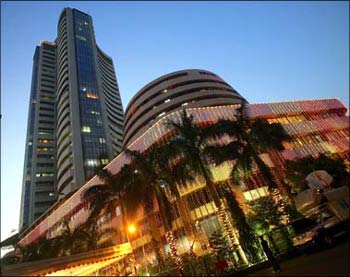
'There is no change in the overall story of economic recovery.'

The government has provided a long-term vision.

'India is no longer the India of the '70s and the '80s.' 'It's a large country with the fastest growing economy.' 'In working with India, you just can't go and humiliate the nation publicly.' USIBC President Mukesh Aghi tells Aziz Haniffa/Rediff.com about how he advises American companies to do business with India, what he thinks of Modi's government and the way forward for the India-US relationship.

Sanjay Mathur, managing director and head of economics research for Asia Pacific (ex-Japan), Royal Bank of Scotland, tells Business Standard that in the emerging market pack, India needs to learn lessons from Korea and Taiwan, which have managed their economic situations well.

The elements are all aligned to make India a global powerhouse, says IMF Managing Director Christine Lagarde.
'There was an overt campaign and there was a covert campaign. The overt campaign may be development, government, and all this nonsense. But the covert campaign, which Mr Amit Shah was doing, was far more important with the help of RSS cadres. This has been an RSS election. From day one I have been saying, this is not Congress versus the BJP, this is Congress versus the RSS,' says Jairam Ramesh, one of the key strategists of the Congress party.
